How SDR-Based Test Infrastructure Replaces Million-Dollar Anritsu and Keysight Boxes
Software-defined radio has quietly matured to the point where a rack of LimeSDR and Ettus B210 boards can cover the majority of a UE conformance plan for a fraction of the cost.
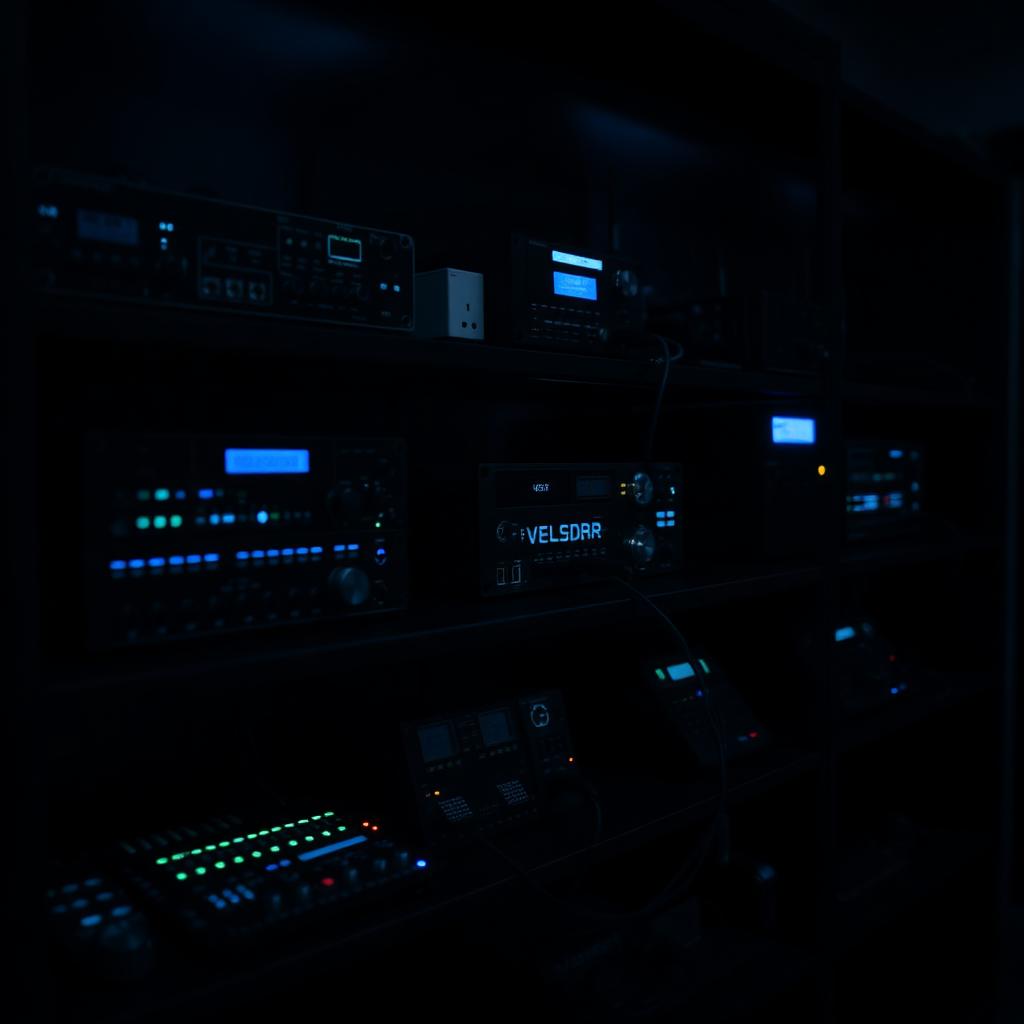
The most important technical development in telecom test in the last decade did not come from a test-and-measurement vendor. It came from the SDR ecosystem. Boards like LimeSDR, Ettus B210, and their successors have matured to the point where a well-designed lane of SDR hardware, driven by open-source stacks and calibrated against reference UEs, can reproduce the network-side behaviour that certification testcases care about with fidelity comparable to purpose-built testers, at a small fraction of the capital cost.
The core difference: we ship a digital box, not a physical tester
Every legacy vendor in this market — Anritsu, Keysight, Rohde & Schwarz, Spirent, VIAVI — sells a physical box. You buy it, you rack it, you power it, you maintain it, you rent floor space for it, you keep engineers around who know how to operate it, and every time 3GPP releases a new specification you either wait for a firmware update or you buy another box. That model made sense in 1998. It stopped making sense the moment SDR became stable, cloud became universal, and every serious engineering team started living inside a browser and a git repository.
AEON Cloud is not a physical tester. We do not ship you hardware. There is nothing to unbox, nothing to rack, no shipping crate, no calibration ticket, no service contract on a chassis. What we ship is a URL. Your team opens the AEON Cloud web application from any laptop in any office, uploads a UE build, and executes real 3GPP TTCN-3 conformance campaigns against real SDR-backed radio lanes that we operate on your behalf. The tester exists — the antennas, the shielded enclosures, the LimeSDR and Ettus B210 boards, the ATS and the SS — but it lives in our racks, and you reach it through the same browser tab you use for GitHub.
That single architectural choice changes everything downstream: procurement becomes a signup instead of a purchase order, capacity becomes elastic instead of fixed, upgrades happen server-side instead of on a truck, teams in three time zones share the same lane instead of fighting over one chamber, and CI systems can trigger conformance runs the same way they trigger a unit test. Nothing to install. Nothing to maintain. Just a browser and a build.
Why SDR became credible for conformance
Three things had to be true for SDR to be credible as a certification substrate. The RF front-end had to be stable enough that the same testcase produced the same verdict across runs. The digital front-end had to be fast enough to keep up with 5G subframe timing. And the software stacks — srsRAN, OpenAirInterface, and their commercial descendants — had to implement enough of the 3GPP stack to talk to real UEs across the release matrix from Release 15 to Release 18.
As of 2026, all three are true. Consumer-grade SDR boards clock in with LO stability sufficient for the vast majority of TS 38.523 testcases when paired with an external reference. The digital front-ends handle 100 MHz NR carriers cleanly. The software stacks implement enough of Release 17 that most UE builds will register, authenticate, establish PDU sessions, and handle handovers without hand-holding. What used to require a USD 1.5M chassis now fits, in aggregate capability, in a shielded enclosure on a lab shelf.
What SDR is honestly good at
SDR is excellent at the signalling-dominated parts of the test plan. Everything under TS 38.523-1 that revolves around NAS and RRC procedures runs cleanly. LTE testcases under TS 36.523 are almost trivial for SDR at this point. EN-DC scenarios, IMS registration, VoNR call setup, tracking area updates, mobility procedures — the parts that make up the bulk of a serious certification campaign — are the parts where SDR shines.
SDR is also excellent at parallelism. Because each lane is comparatively cheap, a lab can run many lanes side by side. That parallelism is what makes cloud economics work: a customer who reserves four lanes for an hour is not competing for the single expensive chassis; they are borrowing four cheap boards from a large pool.
What SDR is honestly not good at
SDR does not replace an anechoic chamber. The parts of TS 38.521 that require calibrated OTA measurement, precise antenna pattern verification, or extreme environmental conditions belong in a chamber and always will. SDR does not replace a high-end signal generator for stringent spectral purity tests. And SDR does not replace the vendor lab that a national regulator requires you to walk into with the actual device in your hand.
The right way to think about SDR is not as a chamber replacement — it is as a chamber offloader. Everything that does not strictly require a chamber should not sit on one; and everything that does not strictly require a chamber is the majority of the test plan.
Why this only works as a service
SDR is cheap per board and expensive per lab. To get useful throughput, you need many boards, shielded enclosures, an RF reference discipline, a calibration regime against reference UEs, a scheduler that keeps lanes fairly allocated, and a software stack that stays current with 3GPP. Building all of that in-house for a single team makes no economic sense. Building it once, at scale, and renting it out is exactly the shape of a service. That is what AEON Cloud is.
How to try this on AEON Cloud
If you want to see your first SDR-backed lane running against your own UE build without buying, renting, or shipping any hardware, the fastest path is to create a free workspace, upload a build artifact, and reserve a lane from the browser. The entire loop — from signup to first verdict — is designed to complete in an afternoon, not a quarter.
Because the tester is a service rather than a device, you never have to plan around a hardware refresh cycle. When 3GPP publishes a new release, the catalog updates server-side and every workspace sees it the next time they log in. When a new SDR generation lands in our lab, your existing campaigns benefit from the improved fidelity without a purchase order.
Further reading
The AEON Cloud documentation covers the CLI, the REST API, the TTCN-3 catalog, the AI Telecom Copilot, and the security model in depth. If you are evaluating for procurement, the pricing page includes a plan comparison matrix and a technical FAQ. If you are evaluating for engineering, the platform page documents the six pillars and the cloud-vs-chamber comparison.