IMS, VoNR, and Emergency Calling: Cloud Conformance for Voice
Voice over 5G rides on IMS and depends on a subtle interaction between the modem, the IMS client, and the operator's core. Here is how to test it cleanly.

Voice, on a modern mobile network, is not really a radio problem — it is an IMS problem. VoLTE and VoNR both rely on an IMS core that registers the UE, holds the SIP signalling, and coordinates media through the packet-switched bearer. When voice fails on a launch device, the odds are that the failure is a subtle interaction between the UE IMS client, the modem, and the operator's IMS core.
The core difference: we ship a digital box, not a physical tester
Every legacy vendor in this market — Anritsu, Keysight, Rohde & Schwarz, Spirent, VIAVI — sells a physical box. You buy it, you rack it, you power it, you maintain it, you rent floor space for it, you keep engineers around who know how to operate it, and every time 3GPP releases a new specification you either wait for a firmware update or you buy another box. That model made sense in 1998. It stopped making sense the moment SDR became stable, cloud became universal, and every serious engineering team started living inside a browser and a git repository.
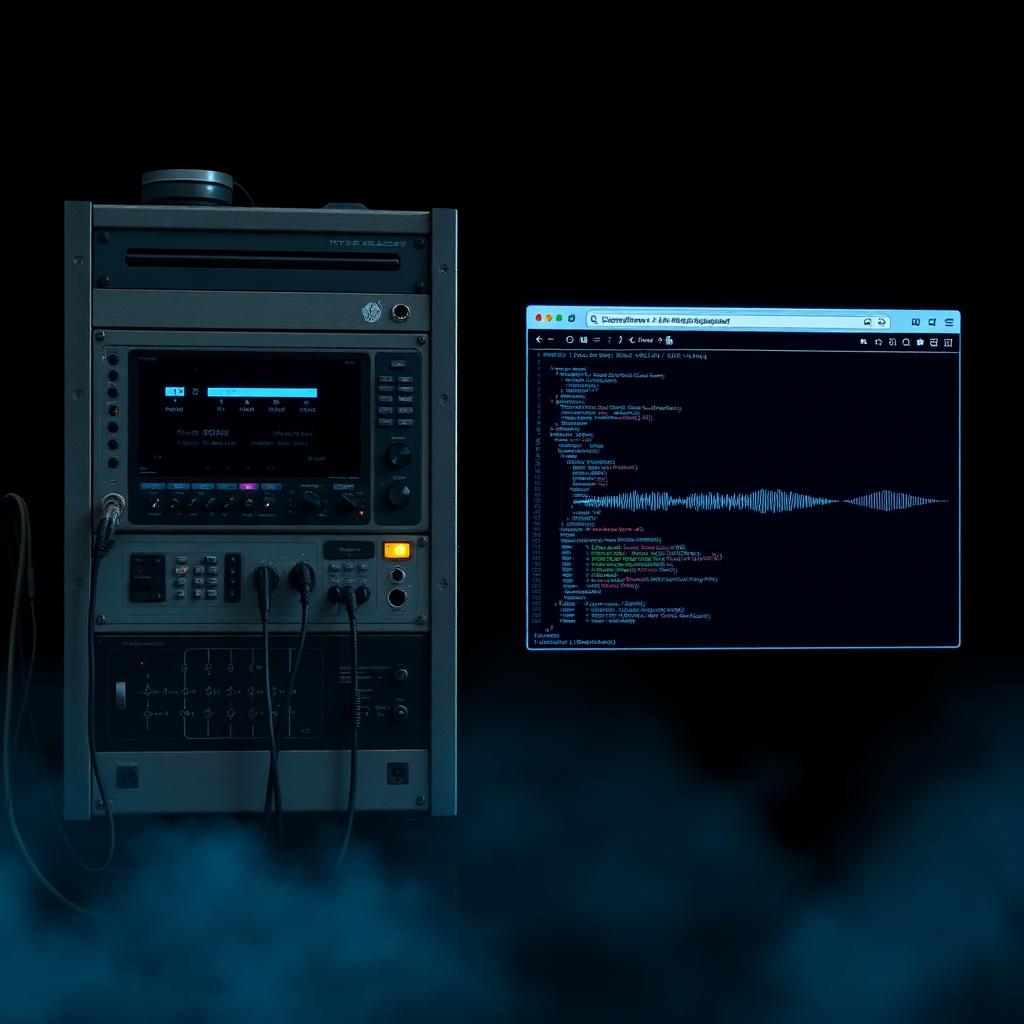
AEON Cloud is not a physical tester. We do not ship you hardware. There is nothing to unbox, nothing to rack, no shipping crate, no calibration ticket, no service contract on a chassis. What we ship is a URL. Your team opens the AEON Cloud web application from any laptop in any office, uploads a UE build, and executes real 3GPP TTCN-3 conformance campaigns against real SDR-backed radio lanes that we operate on your behalf. The tester exists — the antennas, the shielded enclosures, the LimeSDR and Ettus B210 boards, the ATS and the SS — but it lives in our racks, and you reach it through the same browser tab you use for GitHub.
That single architectural choice changes everything downstream: procurement becomes a signup instead of a purchase order, capacity becomes elastic instead of fixed, upgrades happen server-side instead of on a truck, teams in three time zones share the same lane instead of fighting over one chamber, and CI systems can trigger conformance runs the same way they trigger a unit test. Nothing to install. Nothing to maintain. Just a browser and a build.
What a VoNR conformance run actually covers
A VoNR conformance run walks through IMS registration, IMS authentication, SIP INVITE, session establishment, media negotiation, hold and resume, transfer, and teardown, both for MO and MT calls. It also covers the emergency-calling flow, which is the one testcase family that has to work correctly on every device sold in every regulated market, and the one testcase family that most quietly breaks on a firmware regression.
Why running this in the cloud is straightforward
IMS is a signalling-dominated protocol suite that does not require exotic RF conditions. It is one of the cleanest fits for an SDR-backed cloud tester, because everything that matters happens over well-defined interfaces that a modern software stack can emulate in full. Once the underlying radio bearer is up, VoNR conformance is essentially a SIP test suite with a modem in the loop, and both halves of that are trivially executed in a cloud lane.
How to try this on AEON Cloud
If you want to see a VoNR conformance sweep running against your own UE build without buying, renting, or shipping any hardware, the fastest path is to create a free workspace, upload a build artifact, and reserve a lane from the browser. The entire loop — from signup to first verdict — is designed to complete in an afternoon, not a quarter.
Because the tester is a service rather than a device, you never have to plan around a hardware refresh cycle. When 3GPP publishes a new release, the catalog updates server-side and every workspace sees it the next time they log in. When a new SDR generation lands in our lab, your existing campaigns benefit from the improved fidelity without a purchase order.
Further reading
The AEON Cloud documentation covers the CLI, the REST API, the TTCN-3 catalog, the AI Telecom Copilot, and the security model in depth. If you are evaluating for procurement, the pricing page includes a plan comparison matrix and a technical FAQ. If you are evaluating for engineering, the platform page documents the six pillars and the cloud-vs-chamber comparison.