Cloud vs Chamber: A Realistic Cost Breakdown of 5G Conformance Testing in 2026
A line-by-line comparison of the true five-year cost of owning a legacy chamber tester versus running the same campaigns on a cloud, browser-accessed digital testbench.
Every conversation about cloud test infrastructure eventually reduces to a spreadsheet. Somebody, usually a finance business partner, wants to compare the sticker price of a Keysight UXM against the monthly bill from AEON Cloud, and somebody else, usually a lab manager, has to explain that the sticker price is not the right number to compare. This article is the honest version of that spreadsheet. It walks through every line item — hardware, floor space, power, calibration, engineers, chamber time, opportunity cost — and shows why the traditional chamber model is expensive in ways that never appear on the purchase order.
The core difference: we ship a digital box, not a physical tester
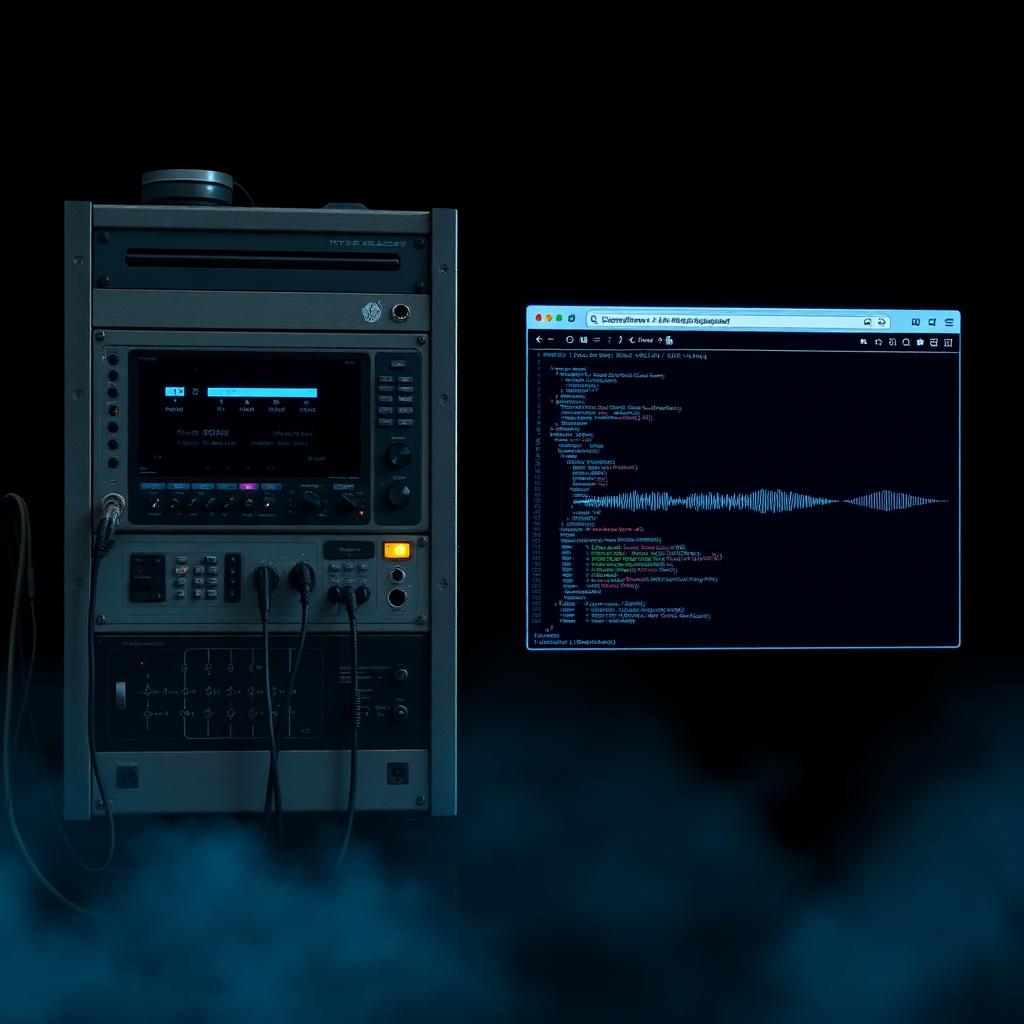
Every legacy vendor in this market — Anritsu, Keysight, Rohde & Schwarz, Spirent, VIAVI — sells a physical box. You buy it, you rack it, you power it, you maintain it, you rent floor space for it, you keep engineers around who know how to operate it, and every time 3GPP releases a new specification you either wait for a firmware update or you buy another box. That model made sense in 1998. It stopped making sense the moment SDR became stable, cloud became universal, and every serious engineering team started living inside a browser and a git repository.
AEON Cloud is not a physical tester. We do not ship you hardware. There is nothing to unbox, nothing to rack, no shipping crate, no calibration ticket, no service contract on a chassis. What we ship is a URL. Your team opens the AEON Cloud web application from any laptop in any office, uploads a UE build, and executes real 3GPP TTCN-3 conformance campaigns against real SDR-backed radio lanes that we operate on your behalf. The tester exists — the antennas, the shielded enclosures, the LimeSDR and Ettus B210 boards, the ATS and the SS — but it lives in our racks, and you reach it through the same browser tab you use for GitHub.
That single architectural choice changes everything downstream: procurement becomes a signup instead of a purchase order, capacity becomes elastic instead of fixed, upgrades happen server-side instead of on a truck, teams in three time zones share the same lane instead of fighting over one chamber, and CI systems can trigger conformance runs the same way they trigger a unit test. Nothing to install. Nothing to maintain. Just a browser and a build.
Line 1 — the hardware itself
A modern 5G conformance tester from the incumbent vendors lands, fully configured, somewhere between USD 1.2M and USD 2.4M depending on how many bands, how many components carriers, and how many optional suites you buy. That number is a five-year commitment because the depreciation schedule most finance teams use for lab equipment is exactly five years. Divide by five and you have a hardware line of roughly USD 240k to USD 480k per year, per chamber, before anything else happens.
On AEON Cloud there is no hardware line, because there is no hardware you own. You pay for lane-hours and for storage. A team running a serious regression suite typically lands between USD 3k and USD 12k per month depending on parallelism, retention, and region count. Multiply by twelve and the annual number is roughly one order of magnitude smaller than the chamber-only depreciation line, before you have counted anything else.
Line 2 — floor space, power, cooling
A shielded RF chamber the size you need for UE conformance takes between 6 and 15 square metres of lab floor. Lab floor in a Tier 1 R&D city — Munich, Cambridge, San Diego, Seoul, Shenzhen, Bangalore — is not cheap. Add power, HVAC, UPS, and the fact that you cannot put a workstation on top of a chamber, and the fully-loaded cost of a chamber-occupied square metre is between USD 800 and USD 1,800 per year. Call it USD 15k per chamber per year on the low end.
On AEON Cloud that number is zero. The lanes live in our racks. Your engineers work from wherever they work.
Line 3 — calibration and maintenance
A conformance chamber needs periodic calibration. Depending on the vendor and the scope of your suite, that is one or two service visits per year. Each visit lands somewhere between USD 8k and USD 20k when you count the vendor fee, the engineer time on your side, and the days the chamber is offline. Call it USD 25k per year per chamber, fully loaded.
On AEON Cloud, calibration is our operational cost, not yours. It happens on a rolling schedule against reference UEs, the drift is monitored continuously, and if a lane drifts out of spec it is pulled from the pool automatically. You never see it. You never pay for it as a line item.
Line 4 — engineers to operate the lab
A physical tester is not self-service. Somebody has to load the build, configure the campaign, monitor the run, capture the logs, unstick the chamber when a cable comes loose, keep the firmware pinned, and file the tickets when the vendor's parser breaks. In most organizations that is between 0.5 and 1.0 full-time engineer per active chamber. At Tier 1 R&D salaries plus overhead, that is USD 90k to USD 220k per year per chamber.
On AEON Cloud the tester is self-service. Engineers upload builds and read verdicts from a browser tab. The operational role — the person who keeps the tester alive — is our role, not yours.
Line 5 — the invisible cost of serialisation
This is the line that never makes it onto the finance spreadsheet, because it is not a line item you write cheques for. It is an opportunity cost. When you own one chamber, your regression suite is serialised on that chamber. If your suite takes 40 hours and you have three teams, each team gets it every third rotation. If a bug lands during team A's slot, teams B and C wait. If you want to parallelise, you buy another chamber, and now you are looking at Line 1 all over again.
On AEON Cloud parallelism is a query parameter. You ask for four lanes and you get four lanes. Your 40-hour suite becomes a 10-hour suite and your three teams stop fighting over who is next. The dollar value of that acceleration is different for every team, but for a chipset vendor with a hard tape-out date it is the difference between shipping and slipping, and it does not appear on any purchase order.
Putting it together
Line up the four hard numbers — hardware depreciation, floor space, calibration, engineers — and a single conformance chamber costs a serious R&D lab somewhere between USD 370k and USD 740k per year, before you count the opportunity cost of serialisation. A comparable AEON Cloud subscription for the same team lands between USD 40k and USD 150k per year. The delta is not a rounding error. It is one full engineering hire per year, minimum, that you are currently spending on a box.
None of this argues that legacy testers are useless. They are excellent for the parts of the test plan that genuinely require an anechoic chamber, calibrated OTA antennas, and true environmental extremes. What it argues is that the boring middle of the certification cost curve — the daily regressions, the CI-integrated smoke tests, the release-candidate sweep, the developer-triggered ad hoc runs — has no reason to sit on a chamber any more. It has every reason to sit on a browser tab.
How to try this on AEON Cloud
If you want to see your existing regression suite running against your own UE build without buying, renting, or shipping any hardware, the fastest path is to create a free workspace, upload a build artifact, and reserve a lane from the browser. The entire loop — from signup to first verdict — is designed to complete in an afternoon, not a quarter.
Because the tester is a service rather than a device, you never have to plan around a hardware refresh cycle. When 3GPP publishes a new release, the catalog updates server-side and every workspace sees it the next time they log in. When a new SDR generation lands in our lab, your existing campaigns benefit from the improved fidelity without a purchase order.
Further reading
The AEON Cloud documentation covers the CLI, the REST API, the TTCN-3 catalog, the AI Telecom Copilot, and the security model in depth. If you are evaluating for procurement, the pricing page includes a plan comparison matrix and a technical FAQ. If you are evaluating for engineering, the platform page documents the six pillars and the cloud-vs-chamber comparison.